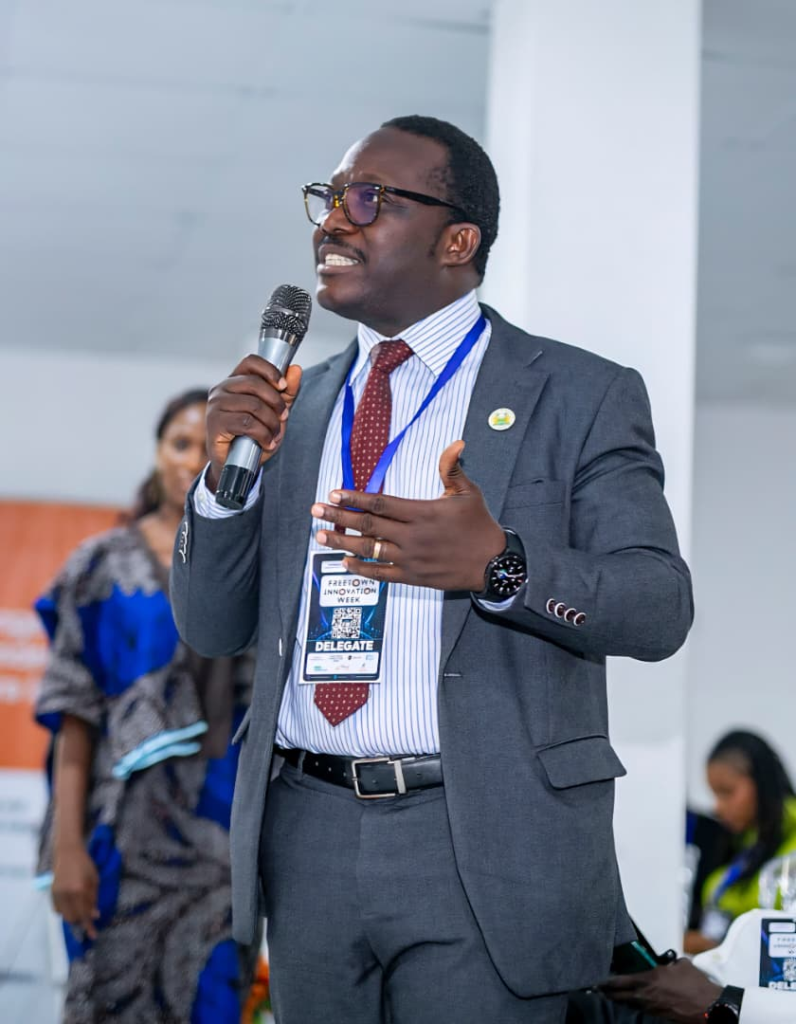
PI-CREF Climate Change Director Urges Young Innovators to Turn Climate Challenges into Economic Opportunities
Hill Station, Freetown, 4 June 2026 — The Director of Climate Change at the Presidential Initiative on Climate Change, Renewable Energy and Food Security (PI-CREF), Ing. Fuad Yusuf-Bangura, has called on Sierra Leone’s young innovators and entrepreneurs to view climate change not only as a challenge but also as a significant source of economic opportunity.
Delivering a keynote address at this year’s Freetown Innovation Week under the sub-theme “Climate Innovation and Sustainable Cities,” Ing. Yusuf-Bangura challenged the traditional narrative that presents climate change solely as an environmental issue.
“For too long, climate change has been discussed primarily as an environmental problem,” he said. “The most important question for Sierra Leone today is this: Can climate challenges become investment opportunities? I believe they can.”
Addressing an audience of investors, researchers, entrepreneurs, and development partners, he highlighted several areas where climate-related challenges could drive innovation and business growth.
He pointed to the recurring floods that affect communities across Freetown during the rainy season as an opportunity for developing flood prediction systems, drainage monitoring technologies, and climate risk analytics. Similarly, he described waste management as a potential driver of recycling enterprises and circular economy businesses, while the country’s persistent energy deficit presents opportunities for solar mini-grid developers and clean energy investors.
Ing. Yusuf-Bangura noted that Sierra Leone possesses several competitive advantages that position it to benefit from the growing global green economy. These include abundant renewable energy resources, significant ecosystem restoration potential, expanding digital infrastructure, and one of Africa’s youngest populations.
“Climate resilience and economic growth are no longer separate conversations,” he said. “They are now the same conversation.”
To unlock these opportunities, the Director outlined four key priorities: strengthening climate innovation ecosystems, expanding access to finance for green enterprises, digitising urban management systems, and equipping young people with the skills required for emerging green jobs.
He concluded by urging Sierra Leoneans to rethink climate action, describing it not as a cost to be managed but as an investment opportunity capable of driving innovation, creating jobs, and fostering inclusive economic growth.
“The future will belong to those who innovate, build, and transform,” he said.